






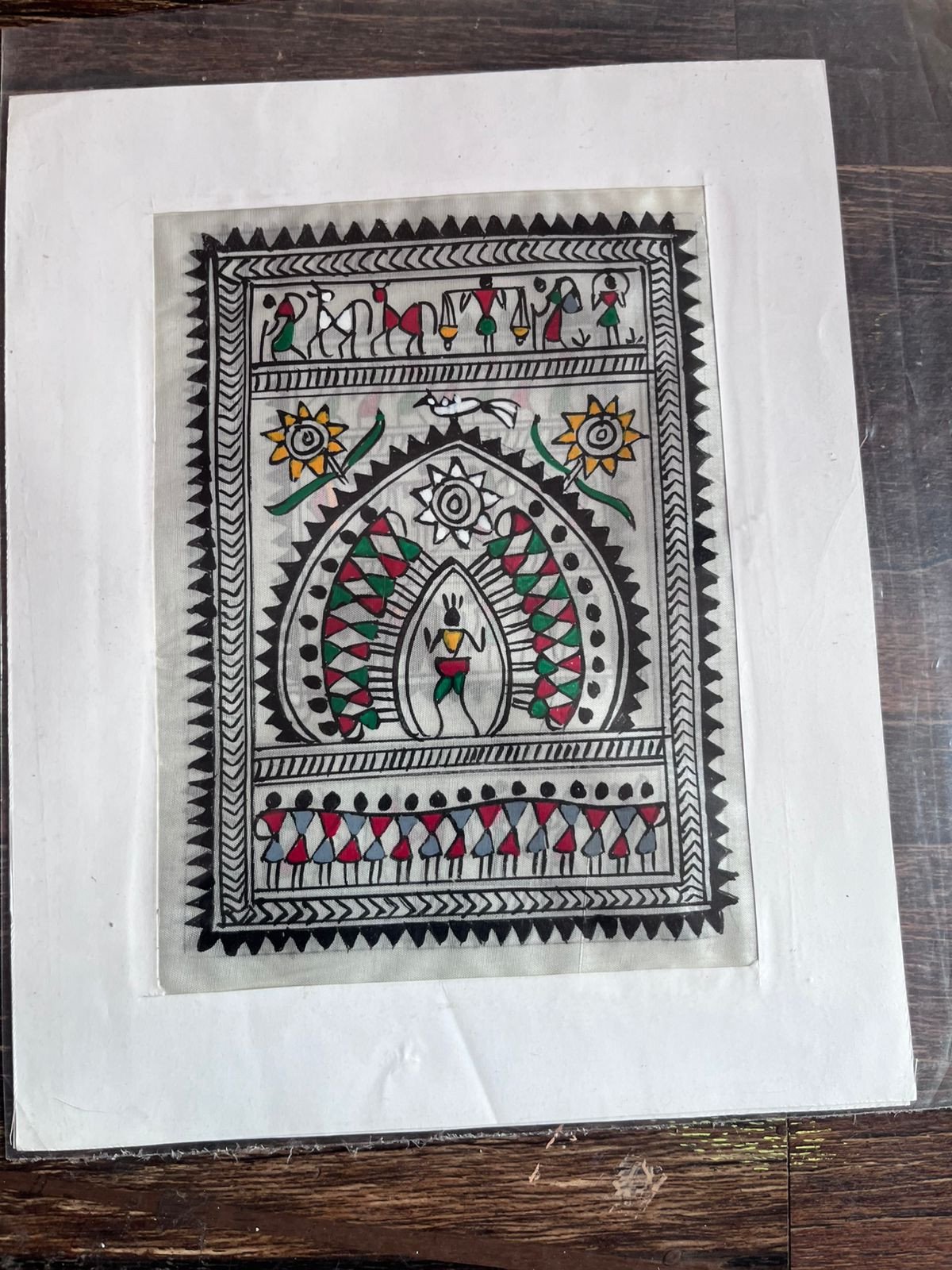
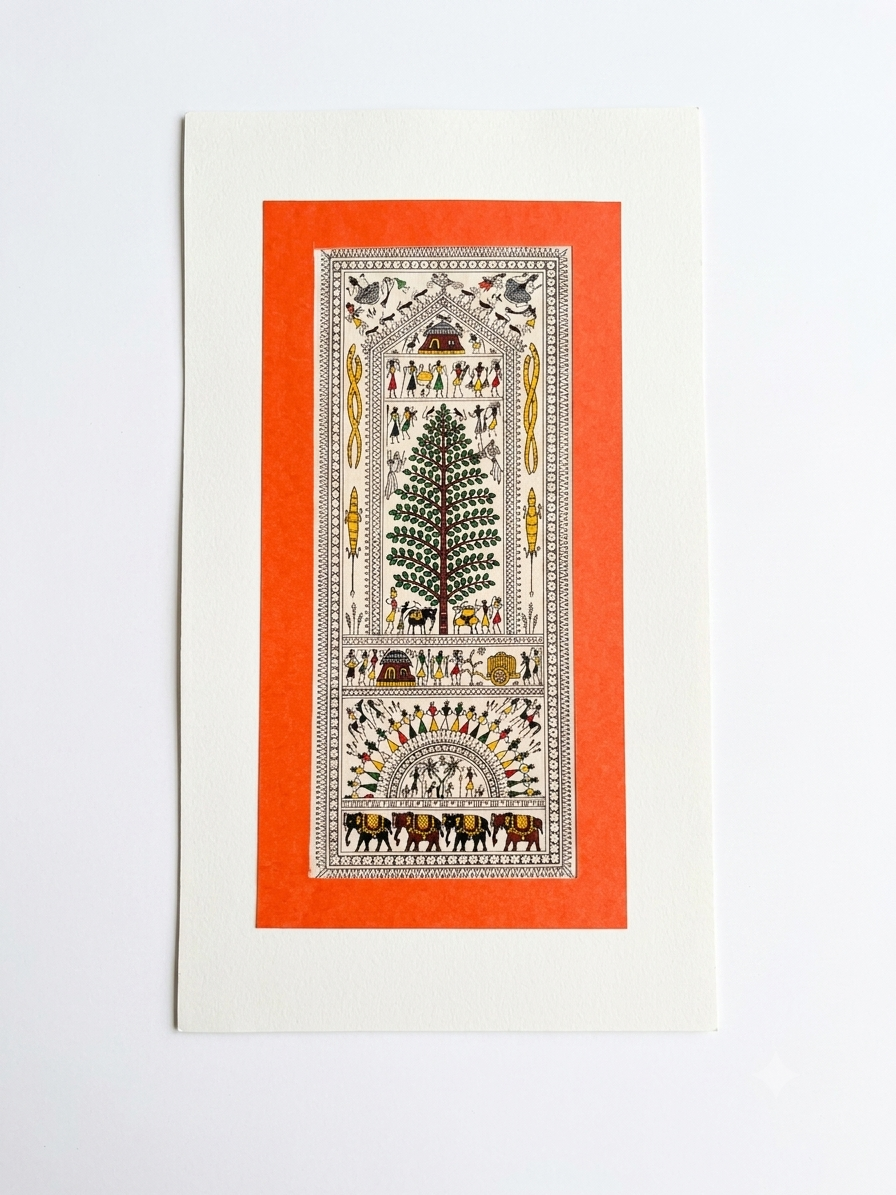
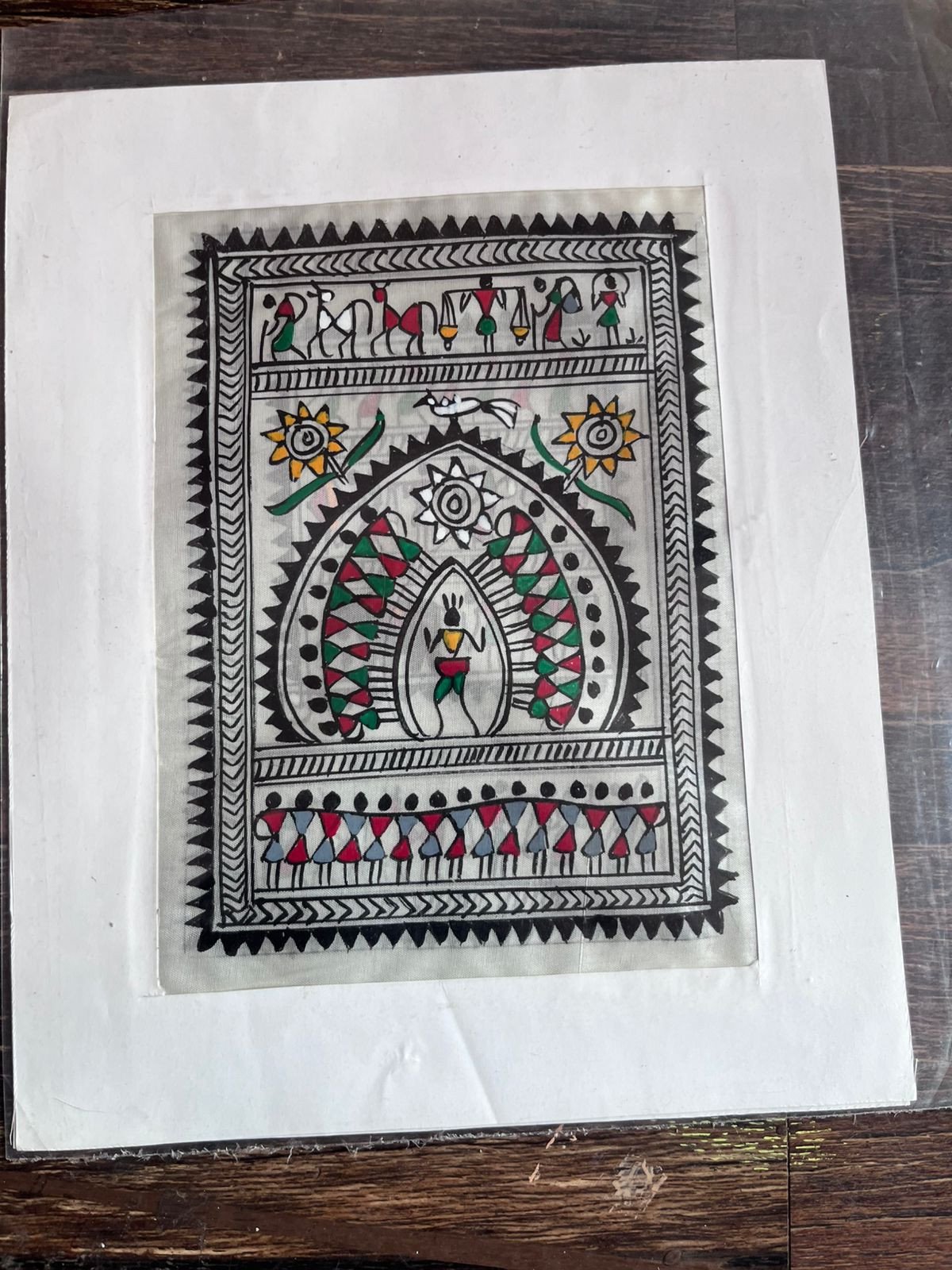
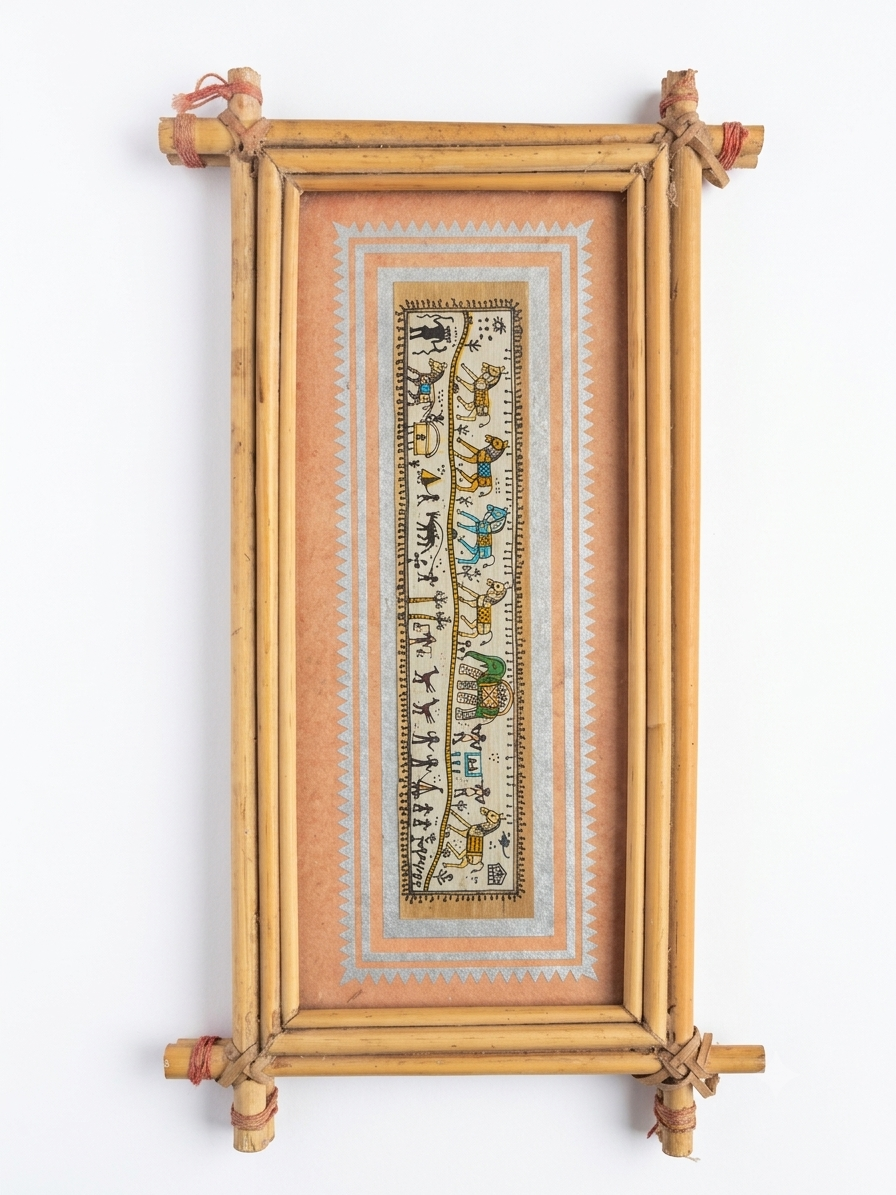
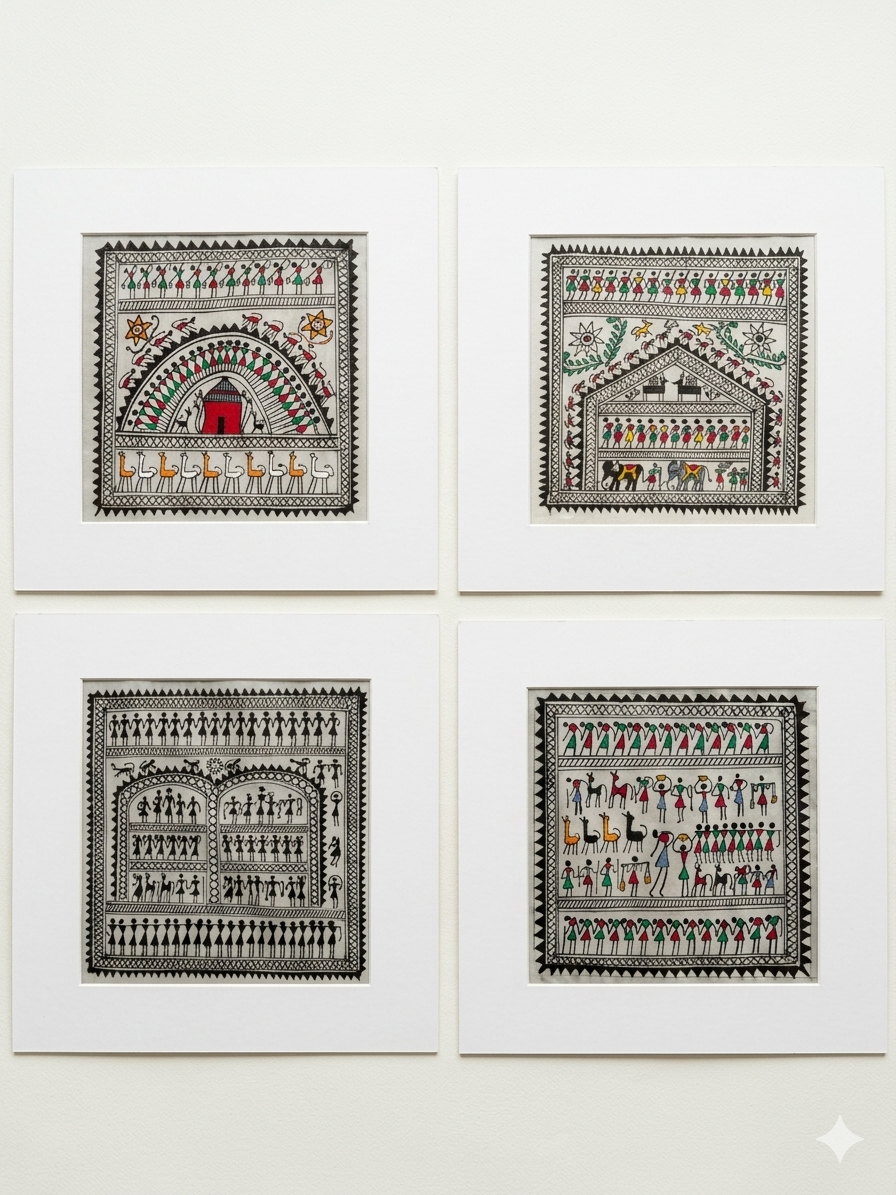
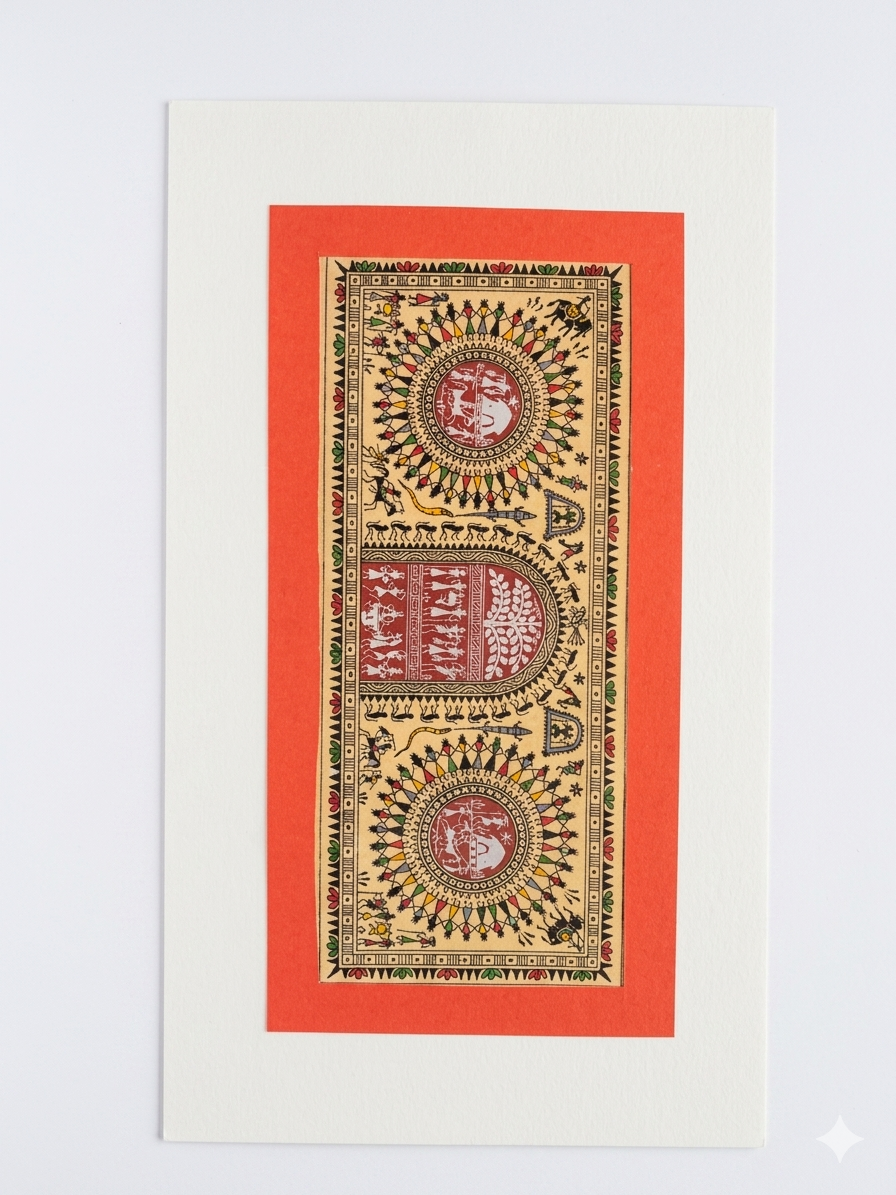
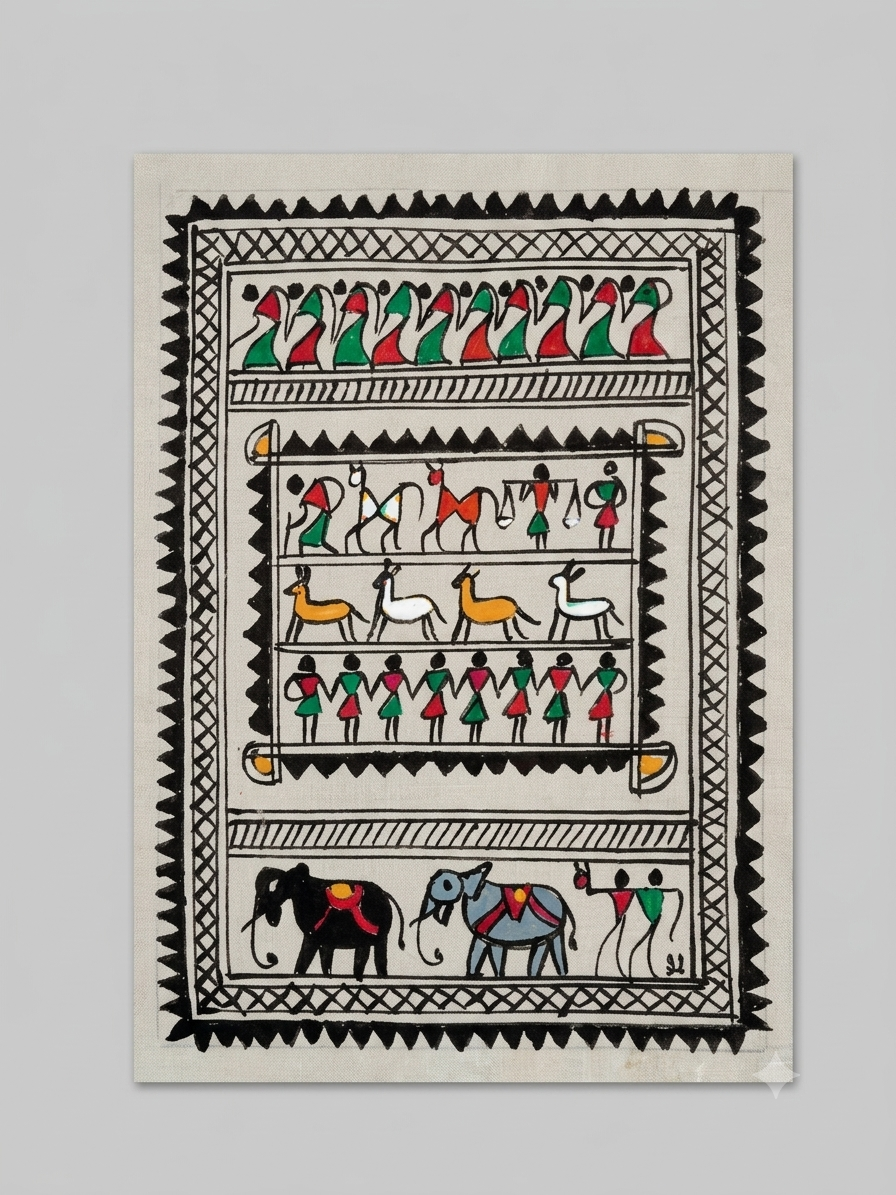
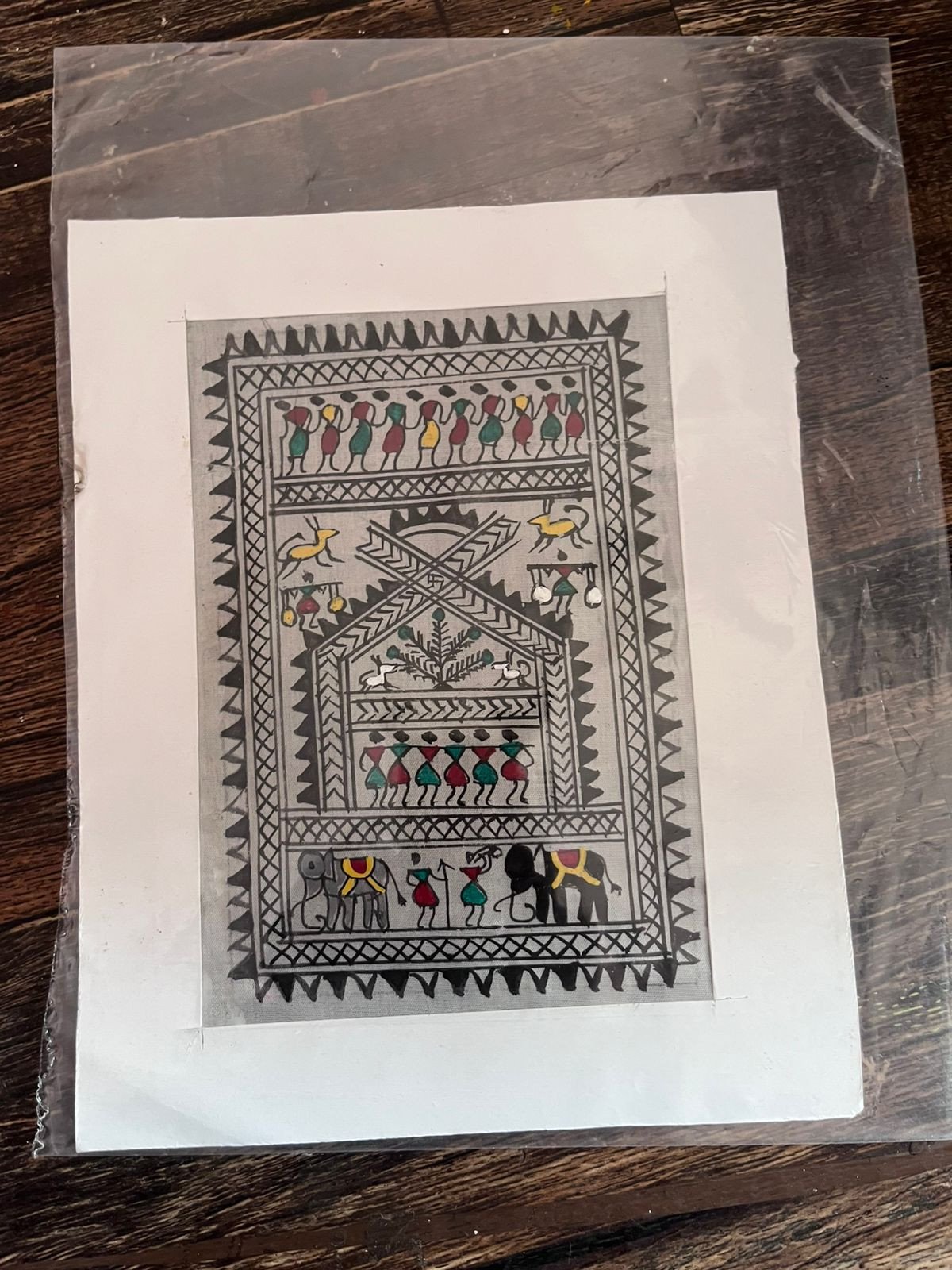
This artwork is a classic example of Warli painting, an indigenous tribal art form originating from the North Sahyadri Range in Maharashtra, India. It is famous for its use of basic geometric shapes—circles, triangles, and squares—to depict life and beliefs.
Structure and Composition:
The painting is organized into distinct panels, typical of traditional Warli storytelling, meant to be read from top to bottom.
The entire piece is enclosed in a signature serrated/triangular border, a common framing element in this style.
Symbolism and Imagery:
Upper Tier: Depicts figures engaged in daily tasks or communal work, such as carrying goods on shoulder poles.
Central Tier: This is the most focal part of the composition. It features a central deity or a ritualistic figure inside an arched shrine-like structure, flanked by stylized sun/flower motifs and ornate, patterned decorations.
Lower Tier: Shows a rhythmic line of figures holding hands in a dance (the Tarpa dance is the most famous example of this communal expression), showcasing the social unity central to Warli culture.
Artistic Palette: While traditional Warli art was strictly monochromatic (using white rice paste on an ochre mud wall), this contemporary interpretation uses a minimalist color palette—black outlines with red and green accents—to highlight specific ritualistic symbols.
This painting is not merely decorative; it is a profound expression of tribal identity and worldview, where geometric patterns map out the harmony between humans, nature, and the divine.
Related products
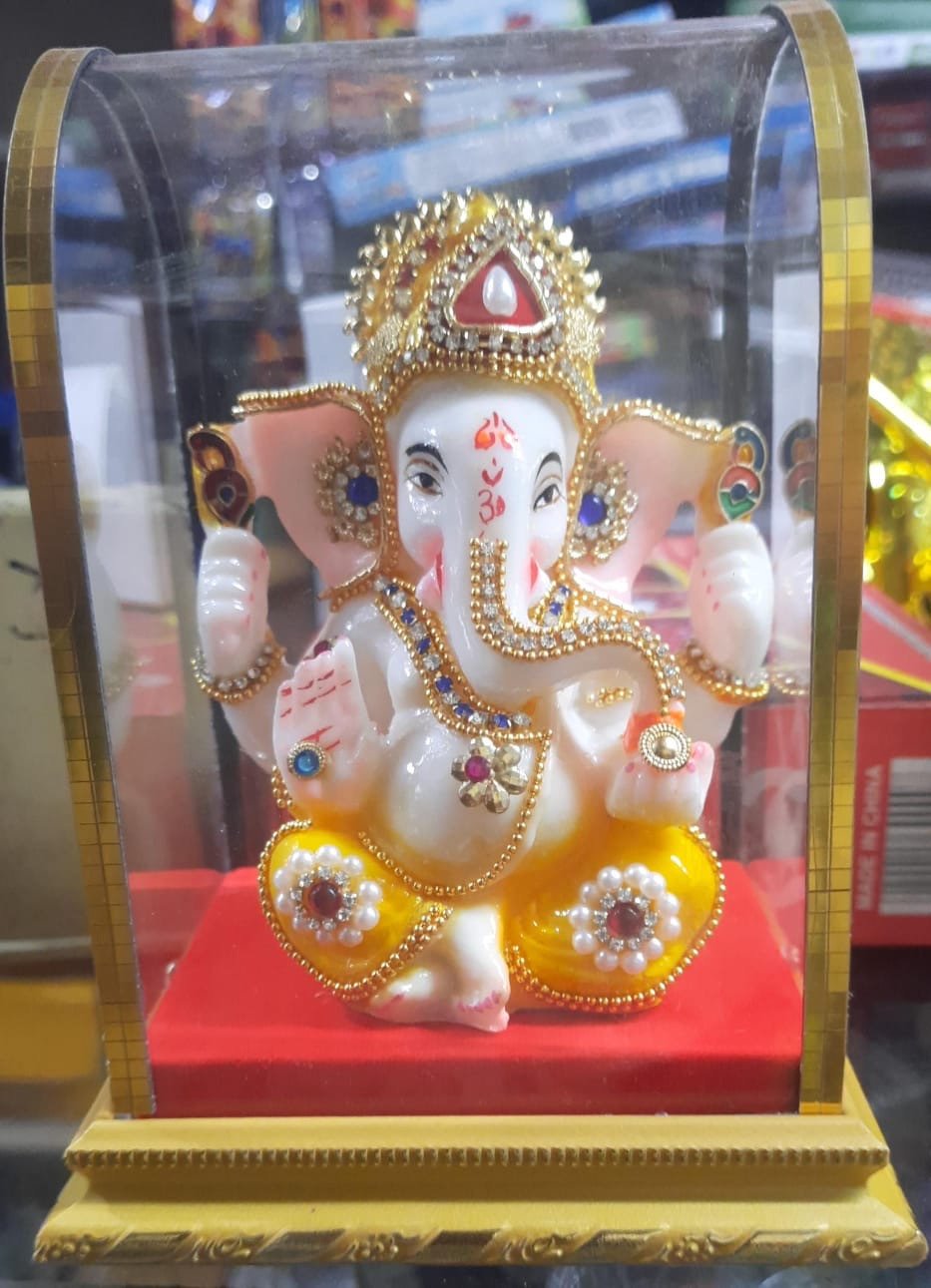
Shri Ganesha Show Piece

Royal Enfield Bike Show Piece
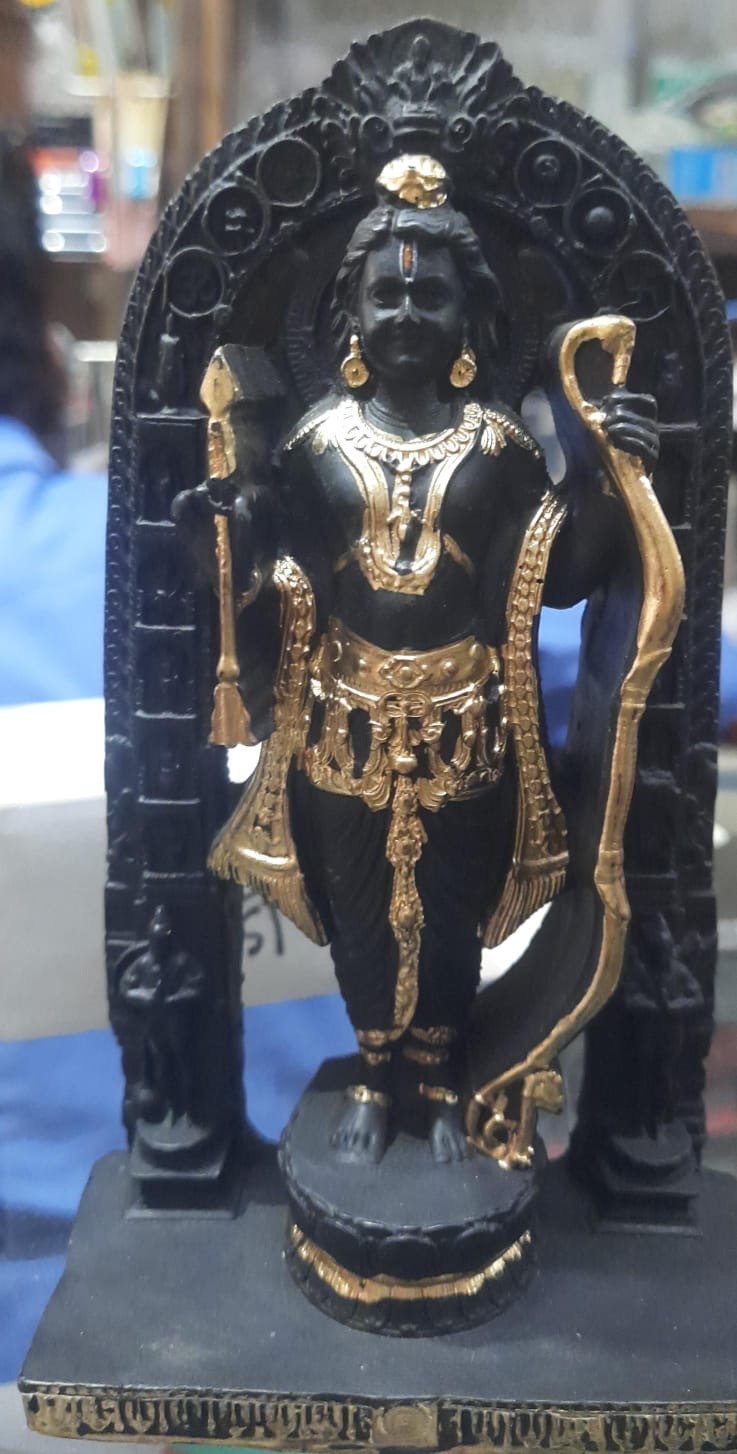
Bhagwan Shri Ram Idol

Flower pot

Flower pot
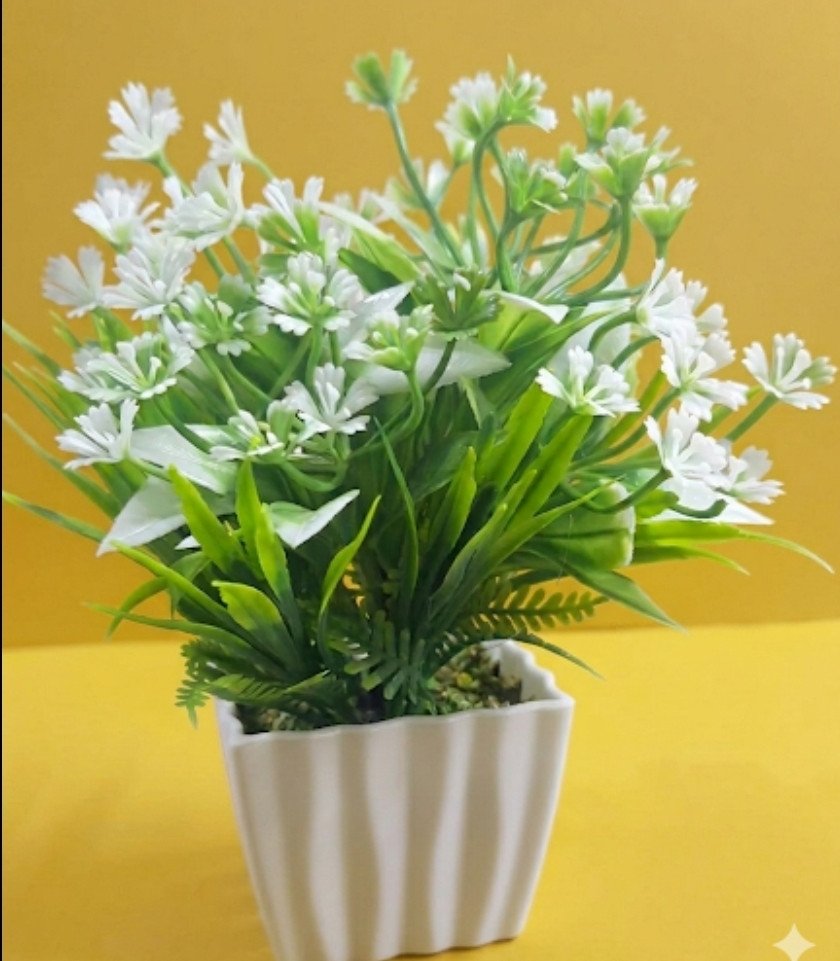
Flower pot
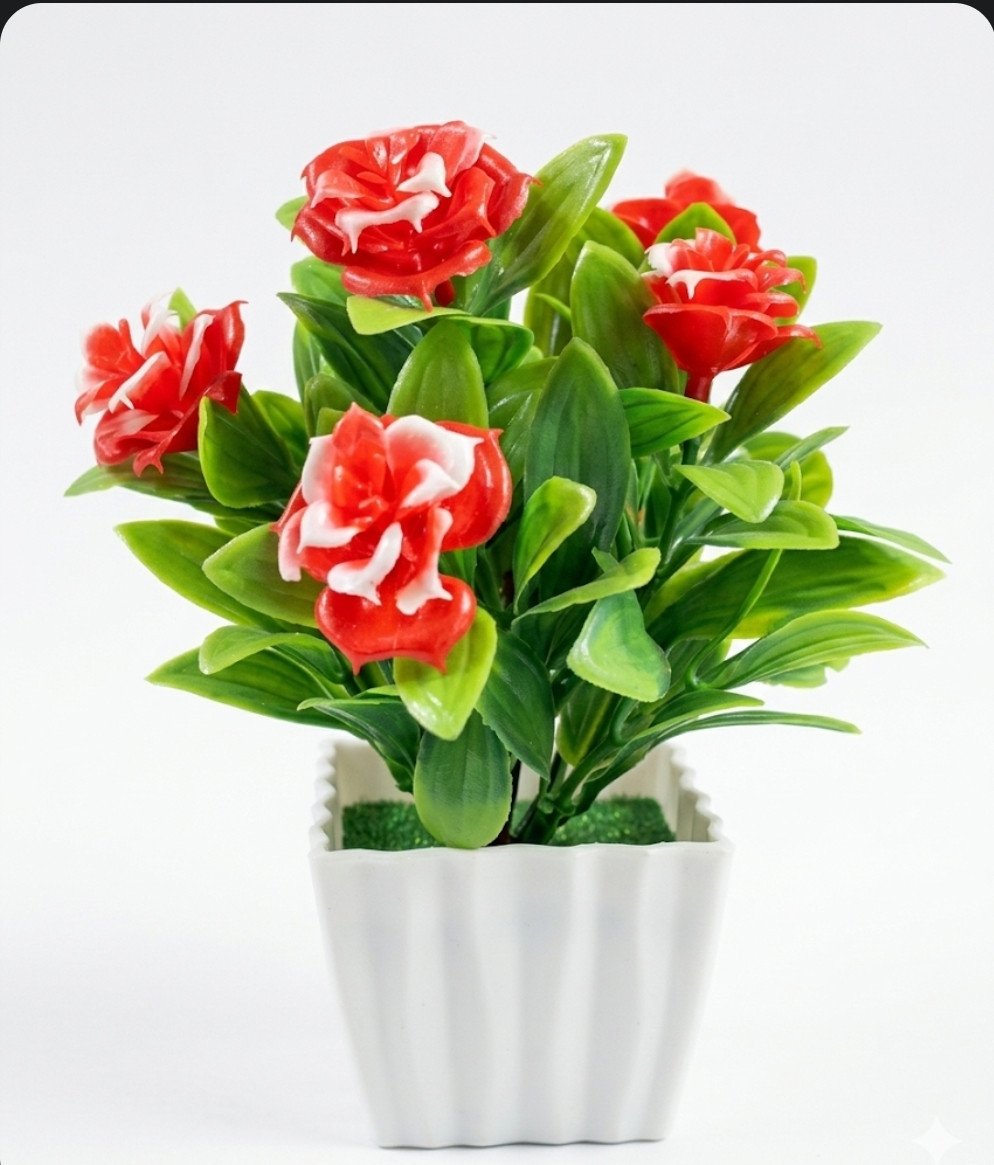
Flower pot

Lord Shiva idol

Radha and Krishna Idol
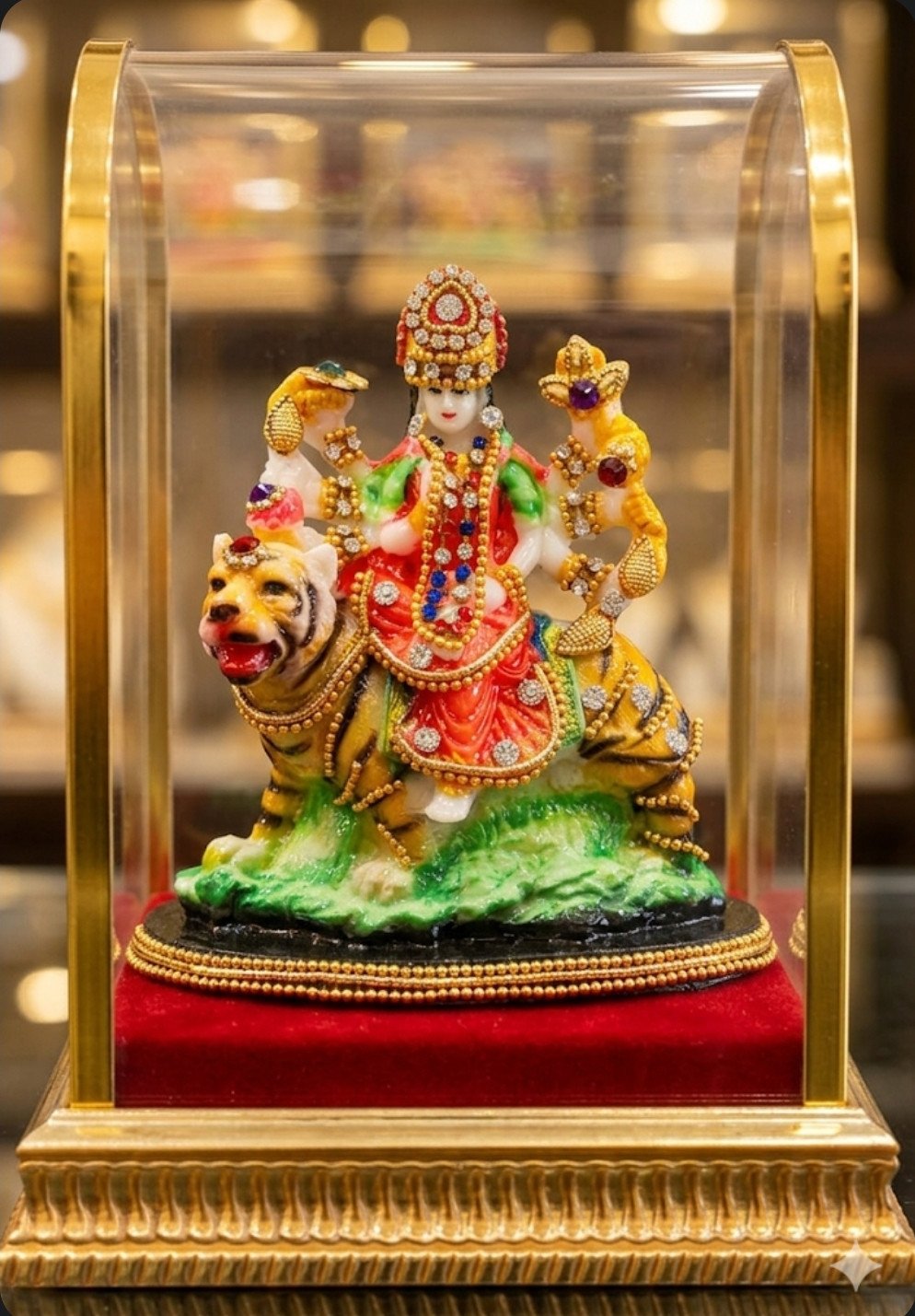
Maa Durga idol

Buddha statue

Lord Ganesha Photo Frame

Photo Frame Scenery
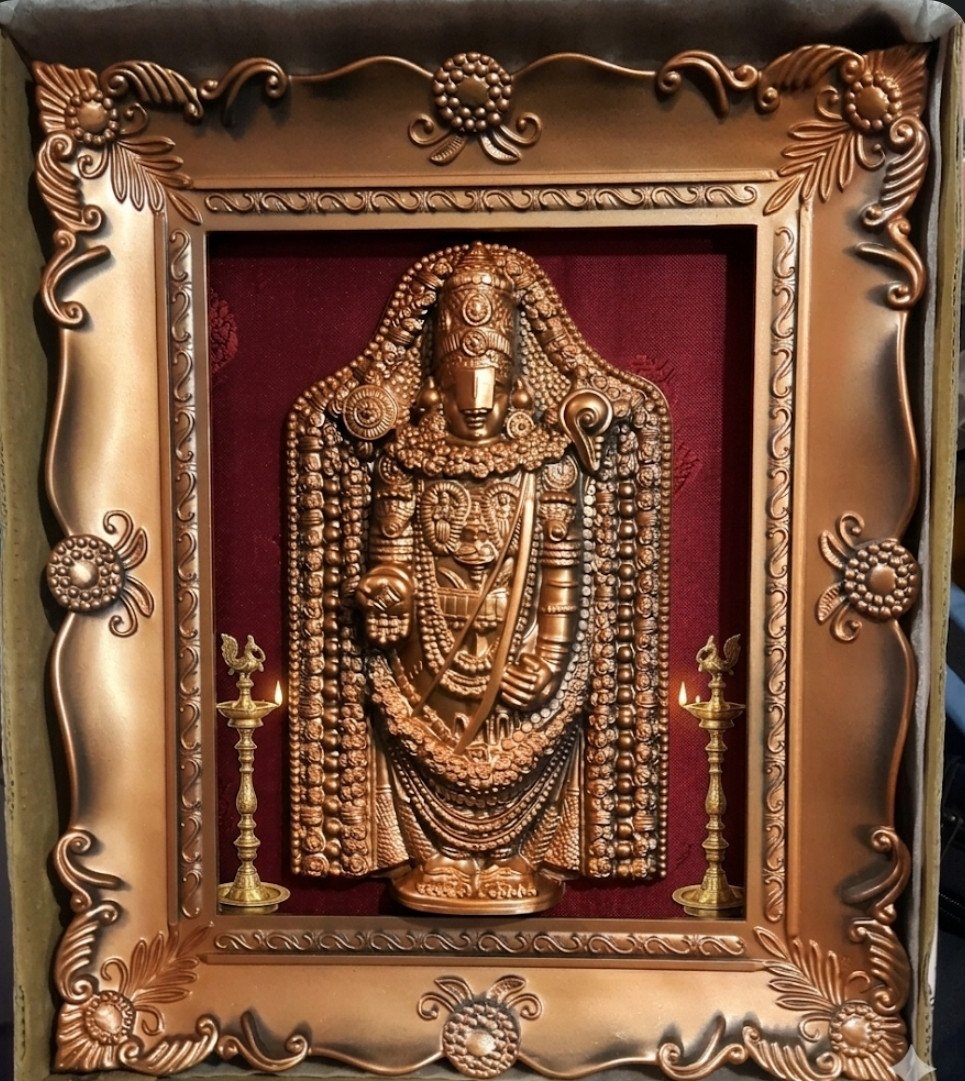

Intelligent Humidifier – Crystal Series (1L)

Colorful Cup Humidifier
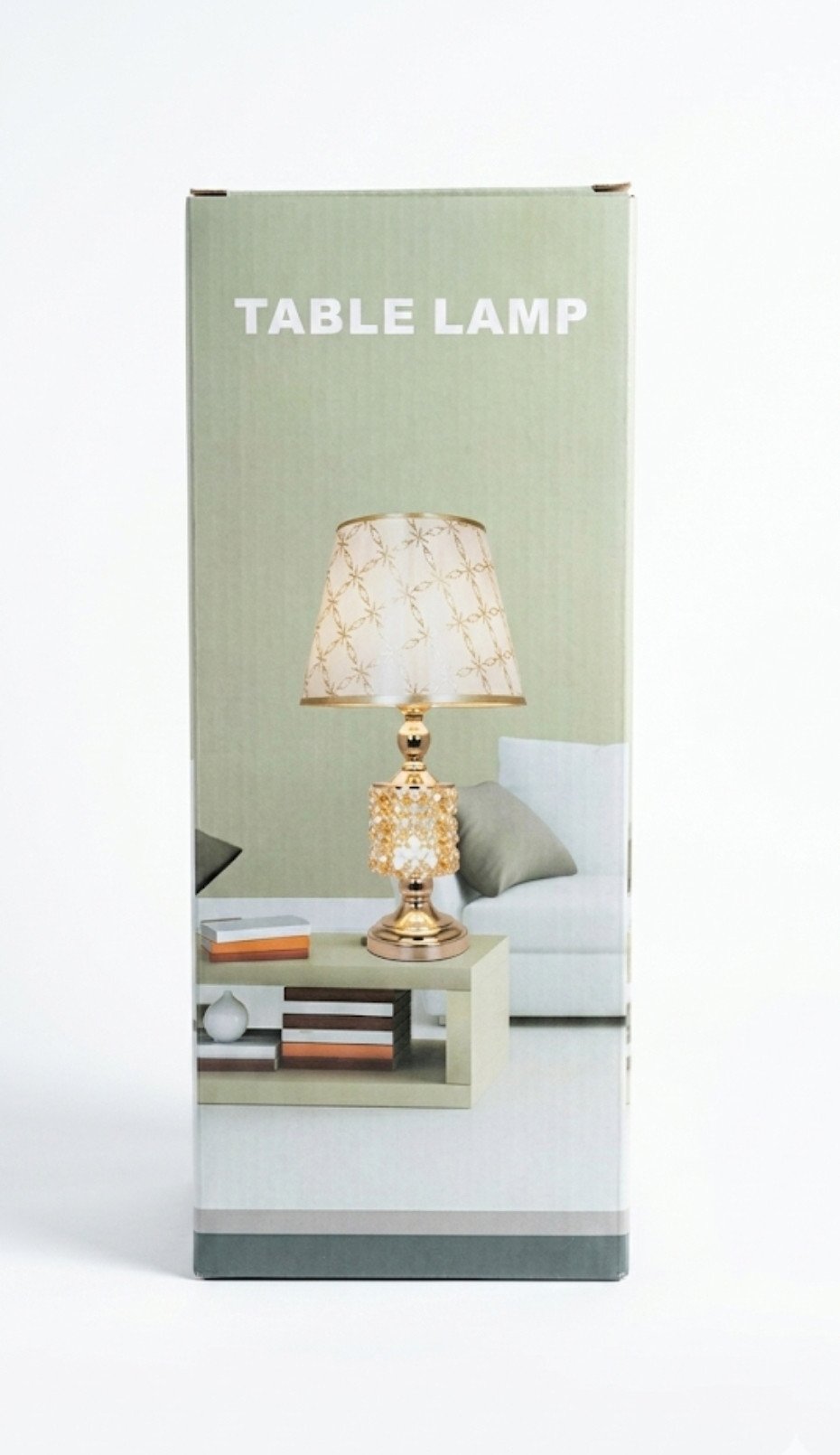
Elegant Crystal Base Table Lamp

Aroma Diffuser

Aroma Diffuser

Eternal Flower Humidifier





Share with Friends
Trading is more effective when you share products with friends!Share you link
Share to